
Basement Finishing Sales Conversation Intelligence
Basement projects live at the intersection of usable square footage, waterproofing risk, and code constraints. RepVise scores discovery, scope framing, and financing on every appointment so your team stops losing projects to sticker shock.
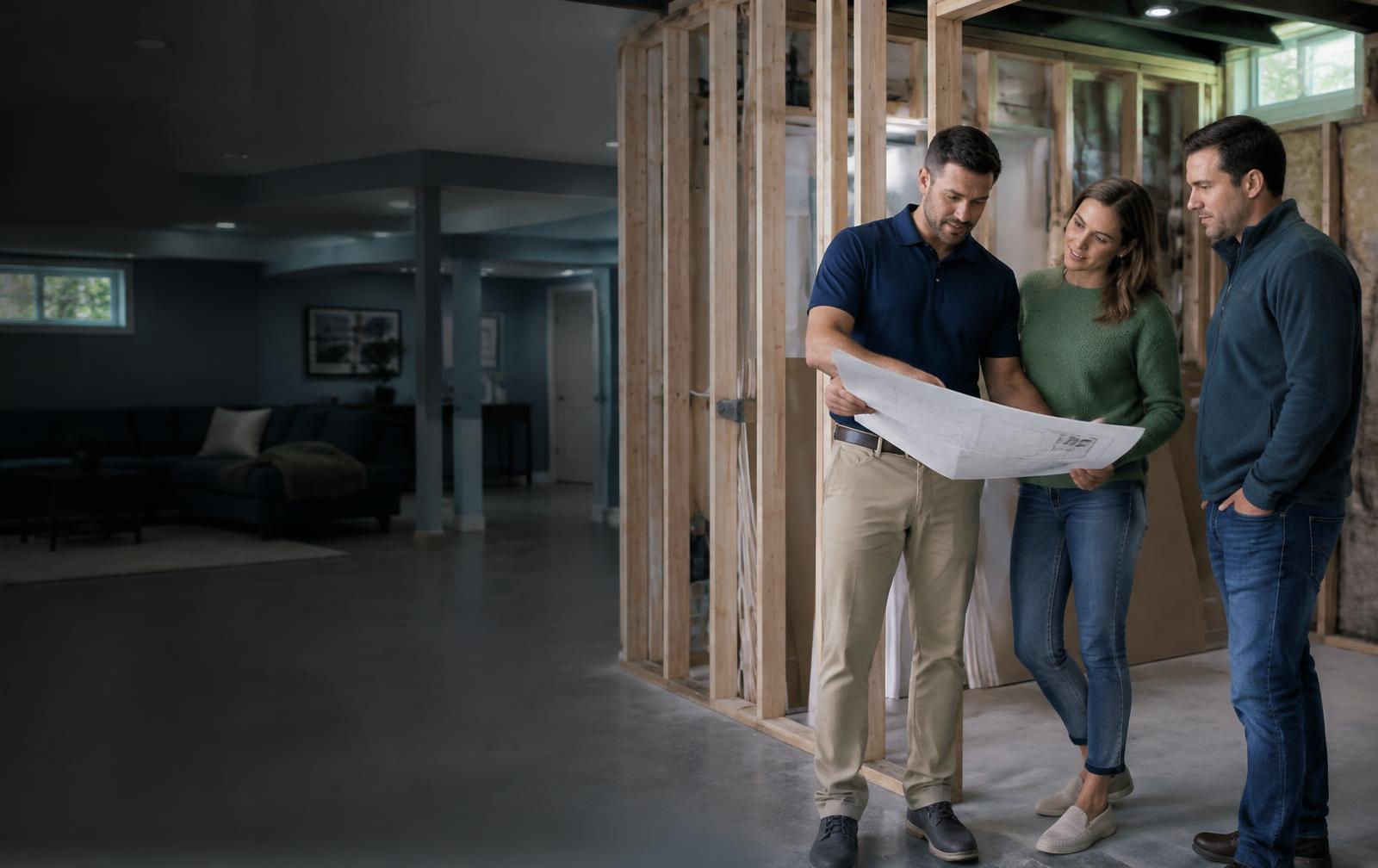
How a basement finishing sale typically moves
- Discovery around intended use — media, in-law, home office, egress bedroom, gym.
- Walk-through of existing basement, mechanical, and waterproofing conditions.
- Scope conversation — full finish, waterproofing only, phased build.
- Layout options and code / egress conversation.
- Product and finish selections.
- Total-cost framing and financing presentation.
- Timeline and disruption expectations.
- Objection handling and close or scheduled follow-up.
Where basement finishing deals commonly stall
- Intended use never made specific enough — layout can't be justified.
- Waterproofing findings framed as upsell rather than protection.
- Total-cost shock because homeowner anchored on square-foot cost only.
- Financing introduced only after price shock.
- Code / egress requirements surfaced as objections rather than pre-empted.
- Follow-up cadence random — 'let me think about it' never revisited.
Common homeowner objections in basement finishing sales
- 'That's way more than I thought.'
- 'Do we really need the waterproofing?'
- 'Can we do this in phases?'
- 'We're going to think about it.'
- 'What about permits and code?'
- 'Can we finance the whole thing?'
- 'What about resale value?'
Financing in basement finishing sales
Basement projects routinely land above what homeowners initially budgeted. That makes financing framing the difference between a stalled quote and a signed project. RepVise scores when financing is introduced, whether it is framed by payment or total, and how phased-build objections are handled.
What basement finishing managers cannot see today
Basement sales are dense, technical, and long. Managers rarely see the appointment itself and often lose the coachable moments to time. RepVise gives managers a scored coaching report on every appointment so they can coach specifically on scope framing, waterproofing conversations, and financing timing.
How RepVise analyzes a basement finishing appointment
Every appointment is transcribed, scored against the 100-Point Framework, and returned as a coaching report with tagged moments. Basement-specific patterns — scope framing, waterproofing conversations, phased-build objections — surface in the pillar breakdowns.
- Six-pillar scoring per conversation.
- Scope framing analysis inside discovery and presentation.
- Financing framing (payment vs. total) analysis.
- Representative scorecards trended weekly.
- Revenue-at-risk pipeline with follow-up recommendations.
What basement finishing managers typically coach first
- Making intended-use discovery specific enough to justify the layout.
- Framing waterproofing as protection, not upsell.
- Introducing financing before the total-cost anchor.
- Pre-empting code and egress objections in presentation.
- Scheduling a specific next step instead of an open-ended 'we'll think about it.'
Revenue Recovery on basement projects
- Phased-build saves — waterproofing now, finish next year.
- Financing-hesitation follow-ups with payment-framed anchors.
- Scope trade-downs that keep the project alive.
- Reopened deals where waterproofing was previously refused and later leaked.
An illustrative basement finishing appointment
A rep runs a full-finish basement appointment for a young family. The score shows strong intended-use discovery but weak waterproofing framing and no financing introduced until after total cost was quoted. The coaching report recommends a follow-up call where waterproofing is re-framed as protection and financing is introduced first with a payment anchor. The follow-up closes the waterproofing plus phase-one framing and drywall.
Illustrative example. Not a customer result.
Frequently asked
Scope is more constrained but decisions are dense — layout, waterproofing, egress, code, mechanicals. Homeowners often underestimate cost, which makes financing framing critical.
Yes. The rubric applies to whichever conversation is actually happening.
Discovery and presentation scoring specifically surface whether scope was well-framed and whether alternative layouts were offered.
Yes. Objection scoring covers regulatory concerns the same way as price objections.
Same day.
See RepVise on your own calls.
Book a 15-minute Revenue Recovery review with the founder.